Within six months, there is a 99 out of 100 chance that half of that money will be lost, and an 80 out of 100 chance that it will be wiped out to the last cent. The reason is very simple. Human beings are by nature stubborn and impatient.
His stubbornness will lead to consecutive losses,
and his impatience will push him to open larger positions in pursuit of bigger profits instead of settling for small, steady gains.
As a result, he will enter a cycle where one mistake wipes out the profit of ten successful trades.
This is not a prophecy. It is statistics. In the global trading arena, there are hundreds of millions of people trading forex, while only 2–3 million trade futures. Even if traders in both markets achieve the same level of success, reputable investment institutions will always prefer a futures trader. The reason is unambiguous: it all comes down to risk measurement. Every experienced trader knows that forex trading is extremely risky. Crypto futures trading is three times riskier than that.
The primary goal of a professional trader is to protect capital. Spending days in front of the platform without opening a single trade, waiting for the right moment for days, and when that moment finally comes, accurately calculating the portion of capital that can potentially be lost—this is the hallmark of professionalism.
Forex began to spread rapidly after the MetaTrader platform was launched in 2005. Many brokers emerged. Competition intensified. One offered 1:100 leverage, another 1:200, another 1:500, and eventually this competitive frenzy pushed leverage as high as 1:3000.
What sets forex apart from other more stable trading markets is the enormous leverage and the fantastic risk opportunities it creates. Imagine this: you have 1,000 dollars in capital, you deposit it in a broker account, and in return you are given a credit line of 500,000 dollars (with 1:500 leverage). Tempted by the size of the opportunity, you jump into trading. At first, you use only 1,000 dollars of that credit—opening 0.01 lots and making 2–3 dollars profit. This doesn’t satisfy you. Next comes 0.02, 0.05, 0.1—until with just 1,000 dollars you are opening trades worth 50,000 dollars (0.5 lots). In this intense process, when the loss on a trade reaches 1,000 dollars, the broker locks your 500,000-dollar limit.
All over the world, hundreds of millions of people have fallen victim to this exaggerated propaganda of the “easiest road to a million,” driven by their own greed. Most populist mentors attack your most sensitive side. They urge you to take bigger risks and aim for bigger gains. But they speak only of profits, not risks. If they mention risk at all, it’s only as a passing note. The reason is directly linked to the small size of your capital.
Knowing that your capital is only 1,000 dollars, how could they possibly motivate you with a promise of a modest 3–4% monthly return (just 30–40 dollars a month)? Your limitless ambitions give them the chance to build their topics like satellites around your dreams. If there were no demand for lies, no one would be eager to sell them.
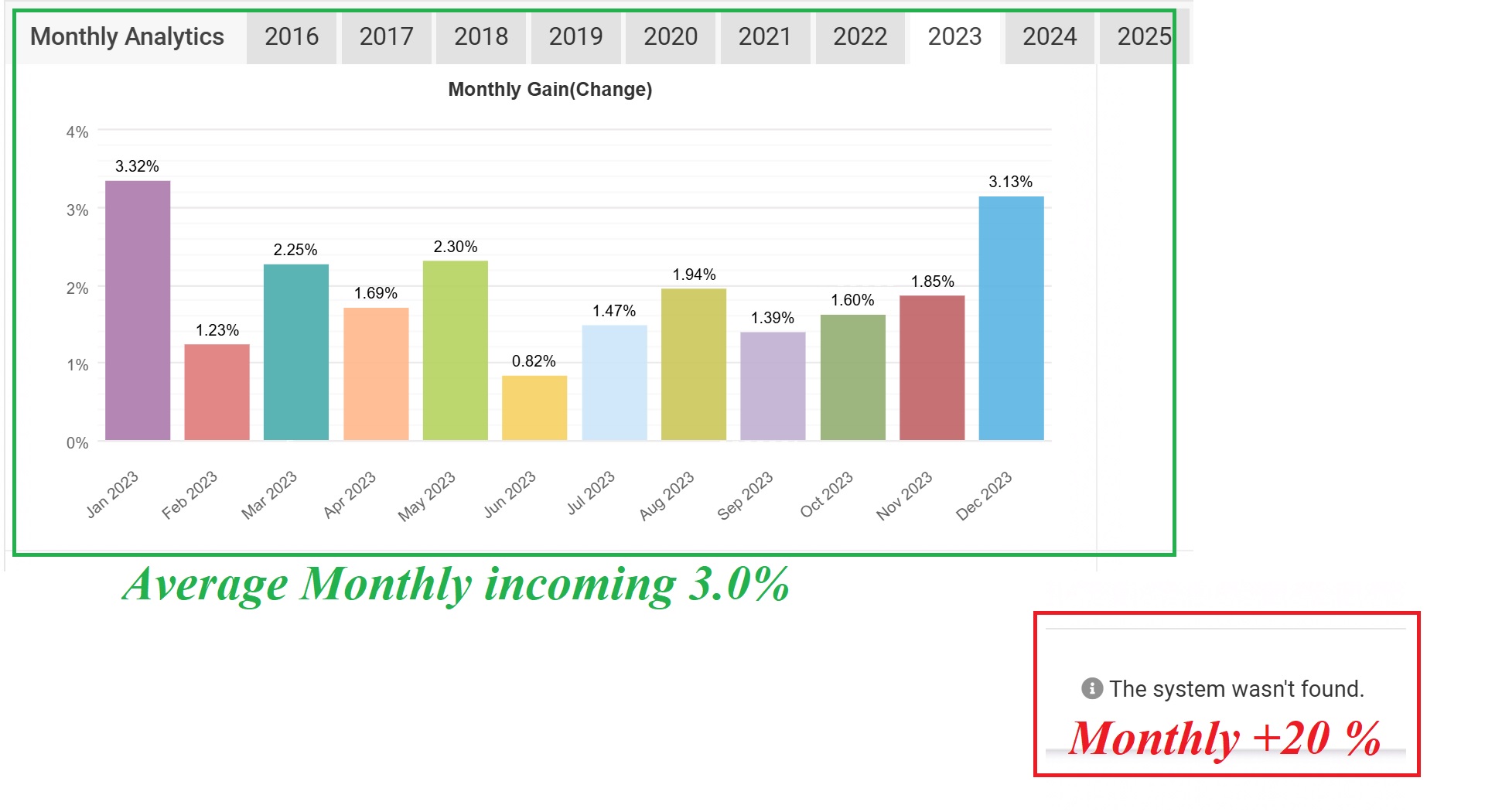
The chart below shows the results of two traders.
One is a conservative trader who, by earning an average of 3% per month, has managed to stay in the market for nine years while carefully protecting his risk.
The other is an aggressive trader who was generating an average of 20% profit per month but, by the 26th month, lost all of his own capital along with 12 million dollars of funds from thousands of investors who had recently joined him. Yes, the account has been deleted, which is why the final results are no longer visible. All unsuccessful traders share the same instinct—to hide their losses. That is why the first thing anyone does after blowing an account is to conceal the damage.
The foundation of every successful business is a realistic and statistical approach. Any project that does not fully account for risk can only succeed by pure chance.