.png)
In Forex trading, lot size is one of the most important concepts every trader must understand before entering the market. It directly determines the volume of your trades, the level of risk you are taking, and ultimately the profit or loss you can expect. Whether you are a beginner or an experienced trader, mastering lot size is crucial for building a sustainable trading strategy.
What Is Lot Size?
A lot in Forex represents the standardized quantity of a financial instrument being traded. Since currency pairs are quoted to four or five decimal places, trading them in very small units would be impractical. Lot sizes help standardize trade volumes and make risk management more structured.
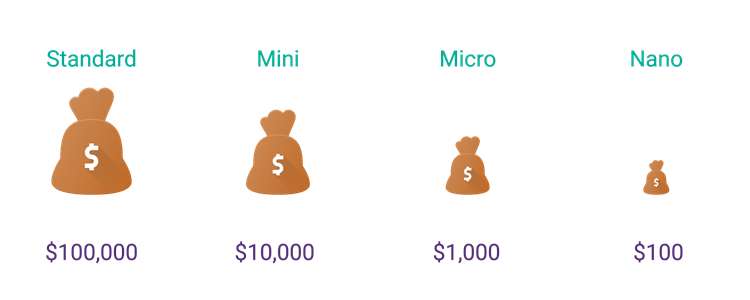
There are four common lot sizes in Forex:
- Standard Lot – 100,000 units of the base currency
- Mini Lot – 10,000 units of the base currency
- Micro Lot – 1,000 units of the base currency
- Nano Lot – 100 units of the base currency
For example, if you are trading EUR/USD, one standard lot means you are buying or selling €100,000 worth of U.S. dollars.
How Lot Size Impacts Risk
Lot size directly affects how much you earn or lose per pip movement. In Forex:
- A standard lot typically equals $10 per pip.
- A mini lot equals $1 per pip.
- A micro lot equals $0.10 per pip.
- A nano lot equals $0.01 per pip.
This means that if you trade one standard lot and the price moves 50 pips against you, you lose $500. But if you trade a micro lot, the same 50-pip move results in only a $5 loss. Therefore, choosing the right lot size is essential for managing risk.
Factors to Consider When Choosing Lot Size
- Account Balance – Larger accounts can support bigger lot sizes, while smaller accounts require more conservative risk management.
- Risk Tolerance – Your personal comfort with potential losses will influence the lot size you choose.
- Leverage – Higher leverage allows larger positions, but it also magnifies risk.
- Trading Strategy – Scalpers may use different lot sizes than swing traders due to time horizon and stop-loss placement.
Example of Lot Size in Action
Suppose you have a $5,000 trading account and are willing to risk 2% per trade ($100). If your stop-loss is 50 pips away, you can calculate lot size as follows:
- Risk per pip = $100 ÷ 50 = $2 per pip
- $2 per pip corresponds to 0.2 lots (mini lot size)
This ensures your risk remains within safe limits.
Why Lot Size Matters in Professional Trading
Professional traders pay close attention to lot size because it allows them to:
- Maintain consistent risk across trades
- Protect their capital from large drawdowns
- Scale their strategy effectively as their account grows
Ignoring lot size can quickly lead to over-leveraging and account losses, even if your trading strategy is sound.
Final Thoughts
Lot size is the foundation of money management in Forex trading. It defines your exposure in the market, determines how much you stand to gain or lose, and ensures your trading strategy remains aligned with your risk tolerance. Before opening a position, always calculate the correct lot size based on your account balance, leverage, and stop-loss placement. By doing so, you protect your capital and set the stage for consistent, disciplined trading.