.png)
In the world of Forex and financial markets, understanding the behavior of institutional traders is crucial for achieving consistent profitability. One of the most powerful tools in this regard is the concept of Order Blocks (OBs). These represent areas where large institutions, such as banks and hedge funds, leave their footprints, revealing their intentions in the market. For retail traders, learning how to identify and trade order blocks can be a game-changer.
What Are Order Blocks?
Order blocks are essentially price zones where significant buying or selling by institutional players has occurred. These are not just regular support or resistance levels; rather, they represent areas where smart money accumulates positions before driving the market in their desired direction. An order block can precede a strong market movement, often signaling a continuation or reversal in the price trend.
Key Characteristics of Order Blocks:
- Consolidation Before a Breakout – They often form as small ranges before a strong directional move.
- Institutional Activity Evidence – They reflect areas where liquidity was absorbed by large players.
- High Probability Reversal Zones – When the price returns to an order block, it tends to react, providing trading opportunities.
Types of Order Blocks
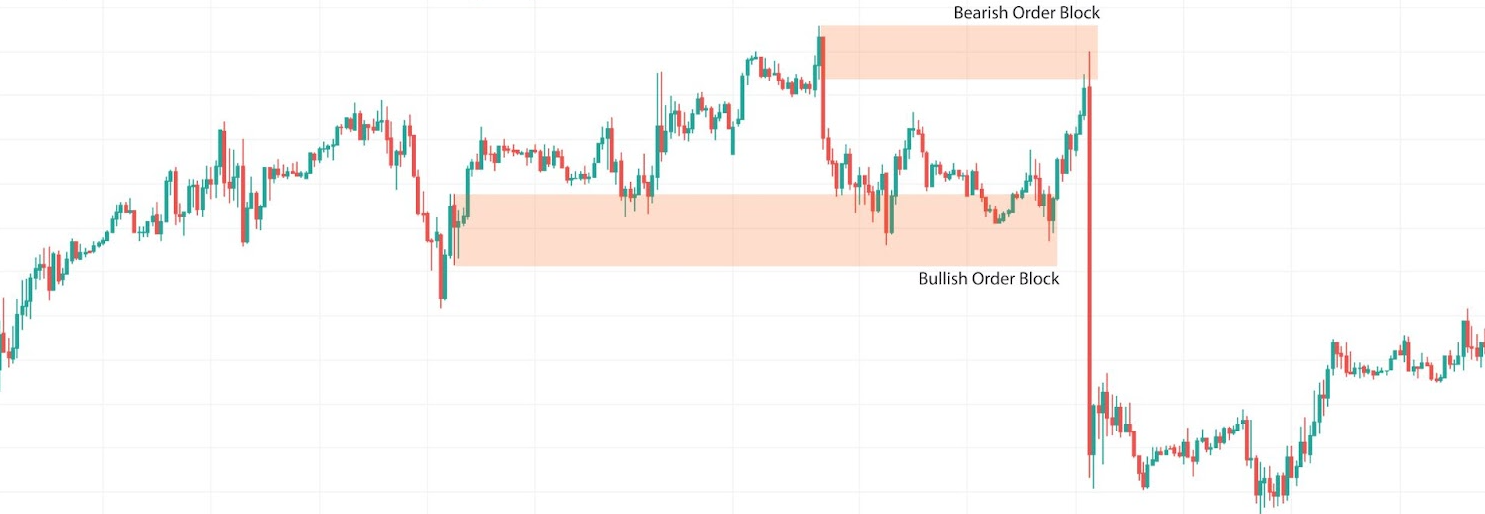
There are generally two types of order blocks:
- Bullish Order Block:
- Occurs when institutions place large buy orders.
- Price often forms a small consolidation or pullback before a strong upward move.
- Acts as a potential support zone in the future.
- Bearish Order Block:
- Formed when institutions place significant sell orders.
- Price consolidates before a strong downward movement.
- Functions as a potential resistance zone in subsequent price action.
How to Identify Order Blocks
Identifying order blocks requires careful observation of price behavior and market structure. Here are the main steps:
- Spot the Last Opposite Candle Before a Strong Move: The candle or series of candles before a strong bullish or bearish move often marks the order block.
- Look for Market Consolidation Areas: Small ranges where price stalls before a significant directional move indicate institutional accumulation.
- Confirm with Volume & Price Action: High volume spikes in consolidation zones often indicate the presence of smart money.
- Observe Reaction Zones: When price revisits an order block, look for signs of rejection, such as wicks, pin bars, or engulfing candles.
Why Institutions Use Order Blocks
Institutions operate with enormous capital. Their orders are too large to be executed at once without moving the market. Therefore, they split orders into blocks, creating liquidity pockets. By strategically placing these order blocks:
- They ensure their trades are executed at optimal levels.
- They create predictable price patterns that retail traders can learn to read.
- They manipulate market sentiment to accumulate favorable positions before large moves.
In essence, order blocks are the footprints left behind by institutions, providing traders a unique insight into the intentions of market giants.
How to Trade Using Order Blocks
Trading order blocks is about aligning yourself with institutional behavior. Here’s a practical approach:
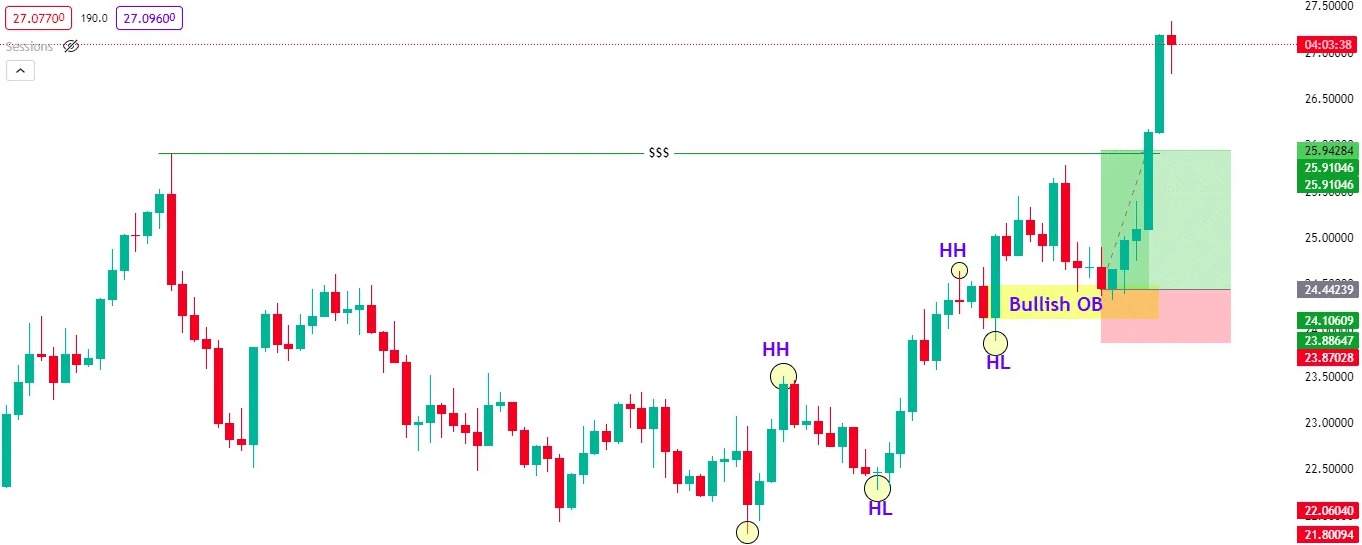
- Mark the Order Blocks on Your Chart: Identify bullish and bearish order blocks on higher timeframes (H4, Daily) for stronger validity.
- Wait for Price to Return: Price often revisits order blocks to “fill liquidity.” Waiting for retracement increases your success rate.
- Look for Confluence: Combine order blocks with other technical indicators such as Fibonacci retracements, moving averages, or trend lines to validate the setup.
- Trade the Rejection: Enter trades when price shows rejection at the order block (e.g., pin bar, engulfing candle).
- Set Risk Management: Place your stop-loss below a bullish OB or above a bearish OB, and define realistic take profit levels based on market structure.
Common Mistakes to Avoid
- Trading Without Confirmation: Blindly entering trades when price reaches an order block increases risk. Always wait for price action confirmation.
- Ignoring Market Context: An order block in a sideways market may not be as effective as in trending conditions.
- Using Order Blocks on Low Timeframes: Higher timeframes provide stronger institutional signals. Using OBs on 1-minute or 5-minute charts can lead to false signals.
Conclusion
Order blocks are a window into the actions of institutional traders. By understanding how to identify, interpret, and trade these zones, retail traders can significantly improve their chances of success in the markets. They are not magic bullets but, when combined with sound risk management and market context, offer a high-probability trading edge.
Learning to read these institutional footprints is a critical step toward trading like the smart money and aligning your strategies with market movers.